

Unkey Deploy is currently in private beta. To get access, reach out on
Discord or email
support@unkey.com.
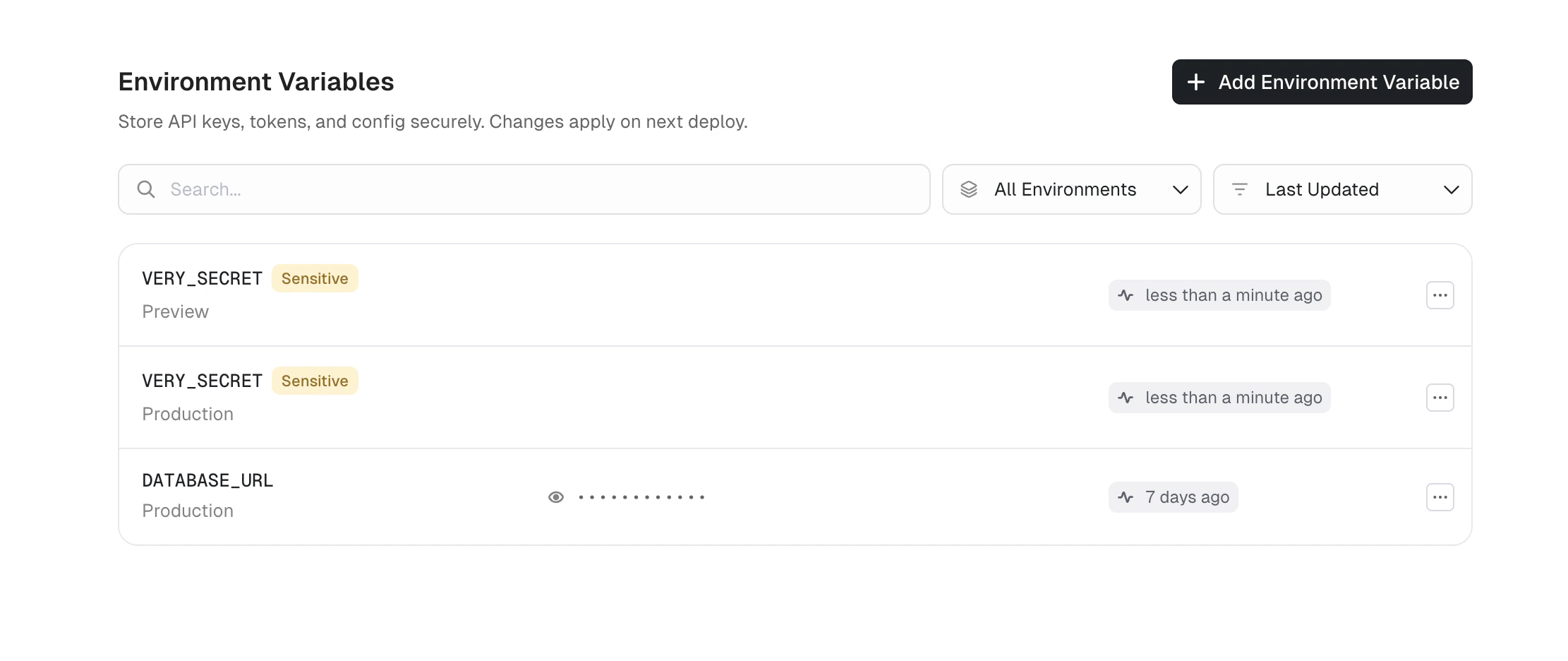
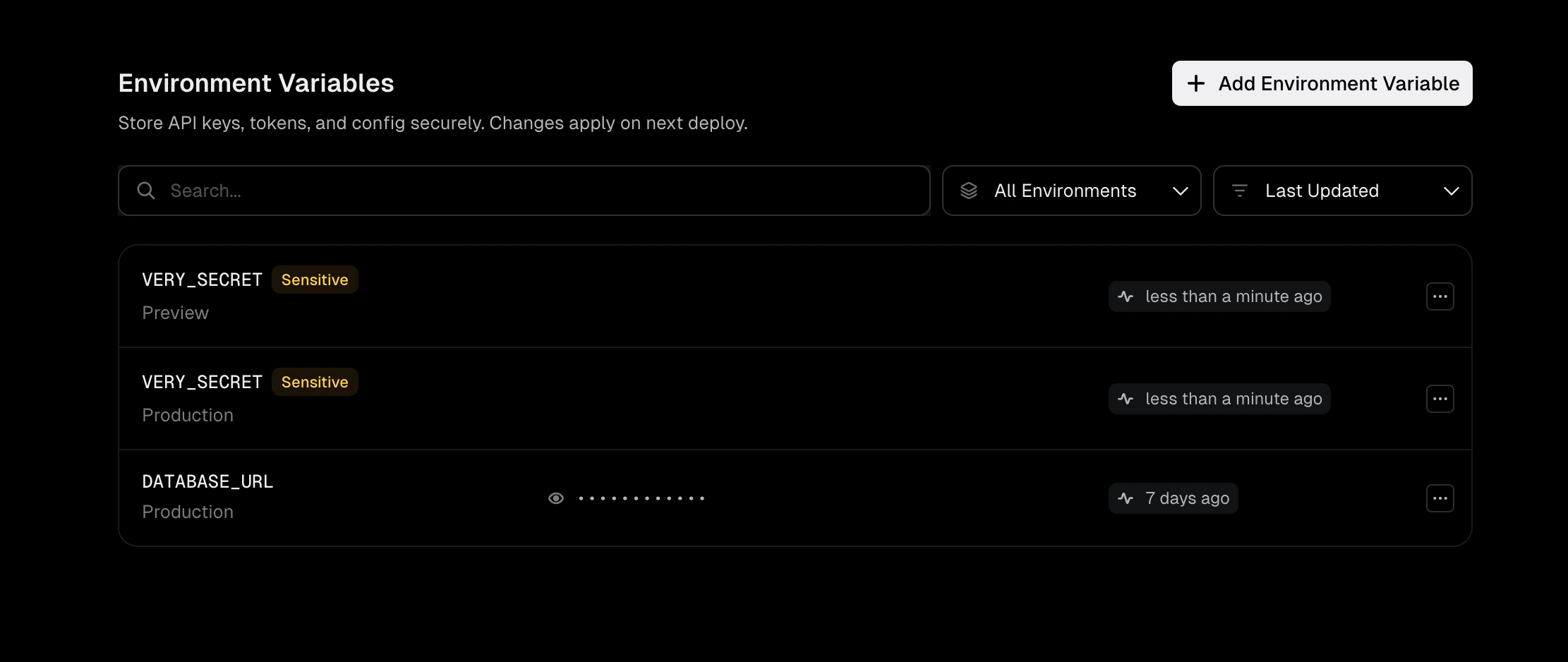
Create variables
- Open your project and go to the Environment Variables tab.
- Click Add Environment Variable to open the slide panel.
- Enter one or more key-value pairs.
- Select the target environment, or choose All Environments to apply the variable everywhere.
- Toggle Sensitive if the value should be write-only.
- Click Save.
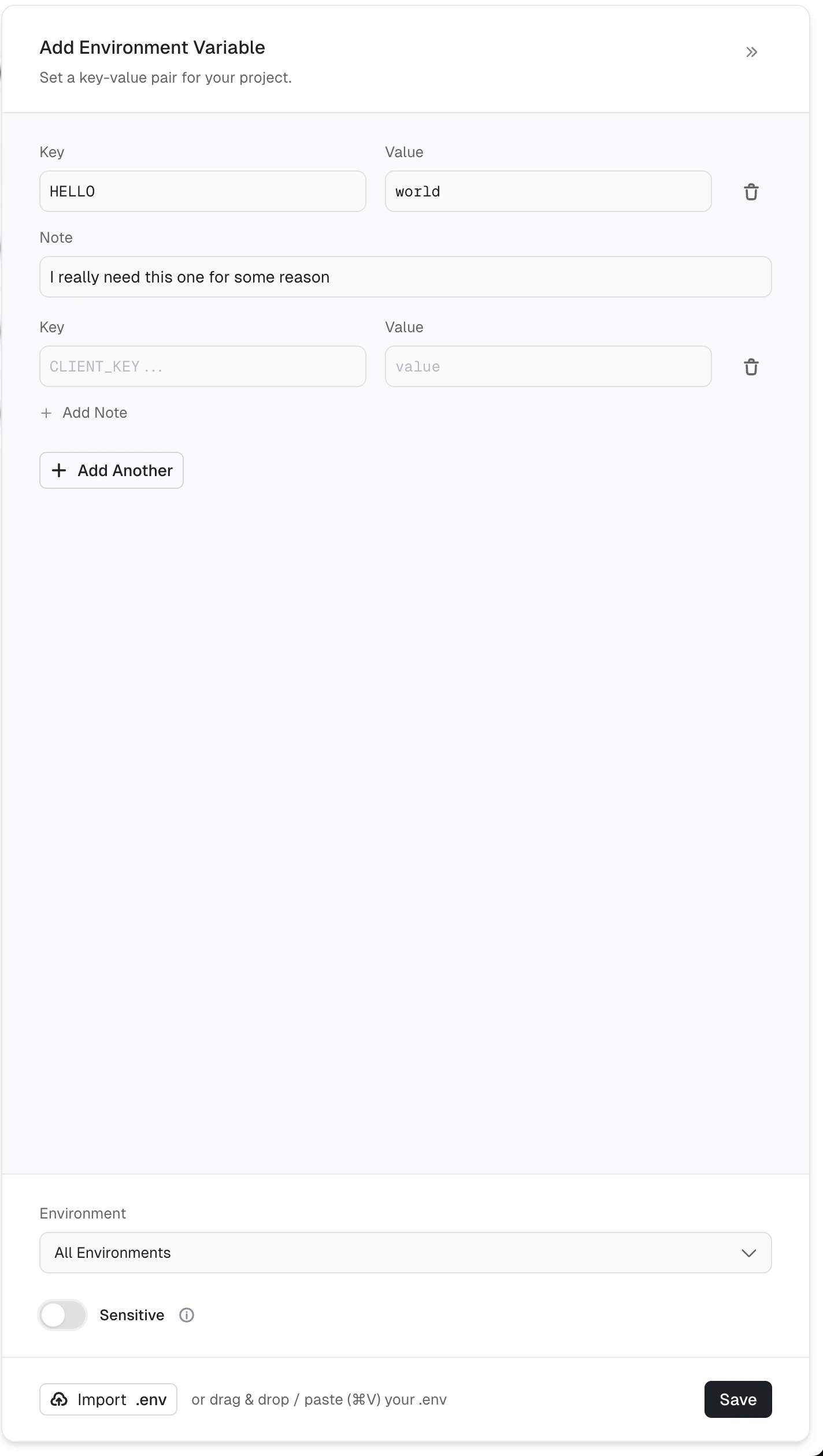
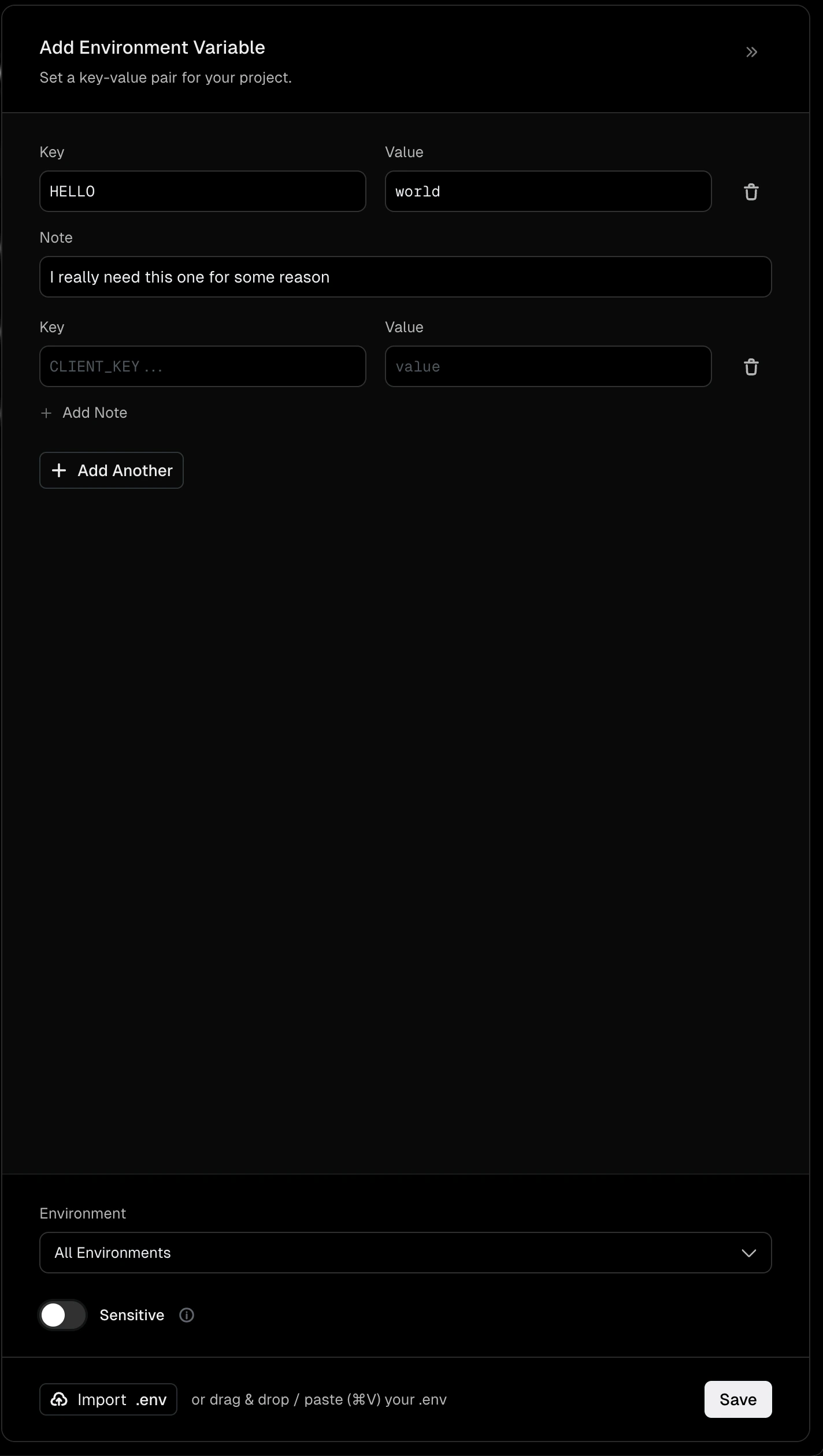
Bulk import
You can add multiple variables at once:- Paste — paste content in
KEY=valueformat (one per line) directly into the form. Unkey parses each line into a separate entry. - Drag and drop — drag a
.envfile onto the form to import all variables from the file. - File picker — click the import button and select a
.envfile from your file system.
Form persistence
If you close the panel or navigate away before saving, Unkey preserves your unsaved entries for the current session. When you reopen the panel, your draft is restored so you can pick up where you left off. A leave-prevention prompt also appears if you attempt to refresh or close the browser tab while the panel is open.Search, filter, and sort
The toolbar above the variable list lets you:- Search — filter variables by name using the search field.
- Filter by environment — show only variables for a specific environment, or select All Environments to see everything.
- Sort — order variables by Last Updated or Name A-Z.
Edit and delete variables
Click any variable row to open the inline editor. You can update the key, value, or note. Use the action menu on each row to delete a variable.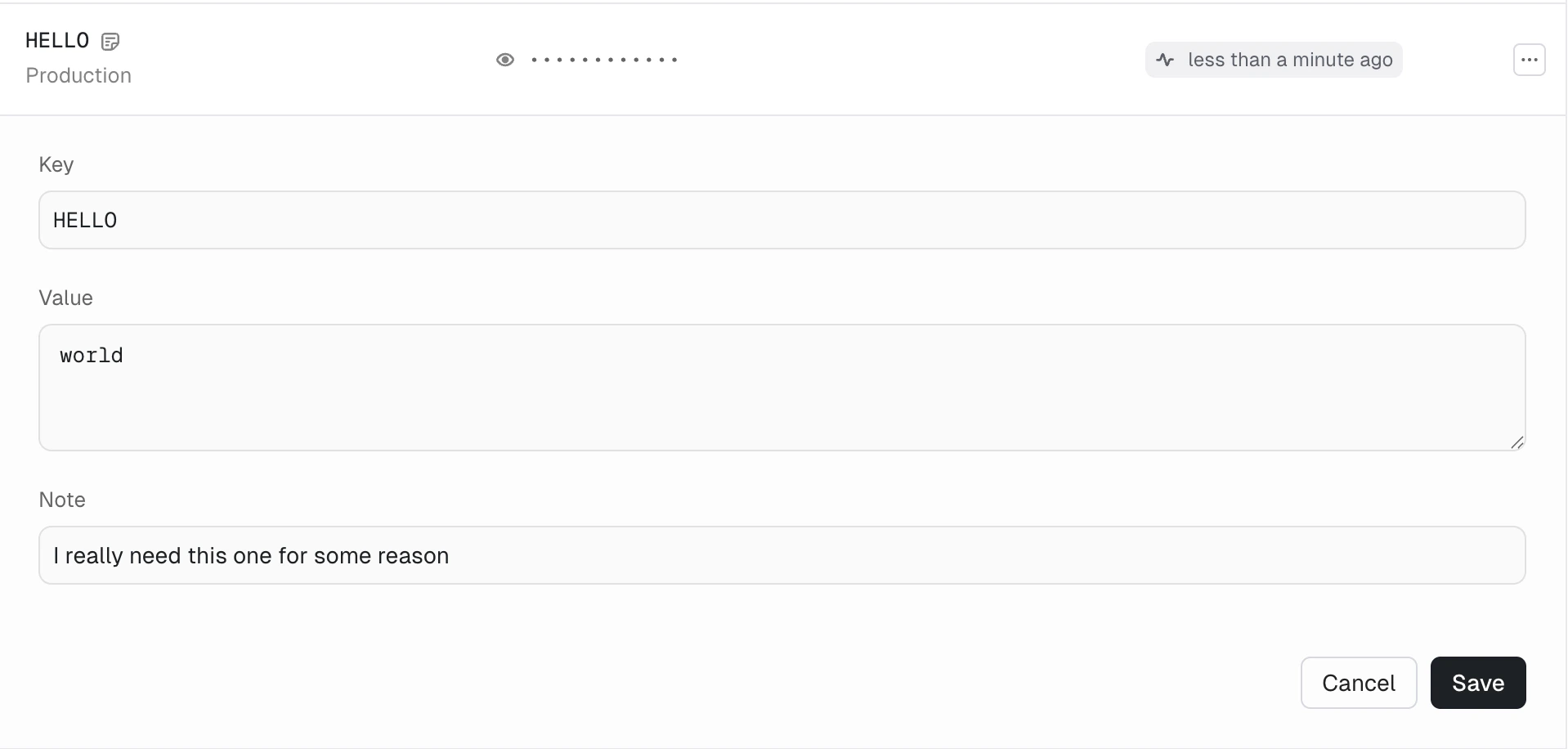
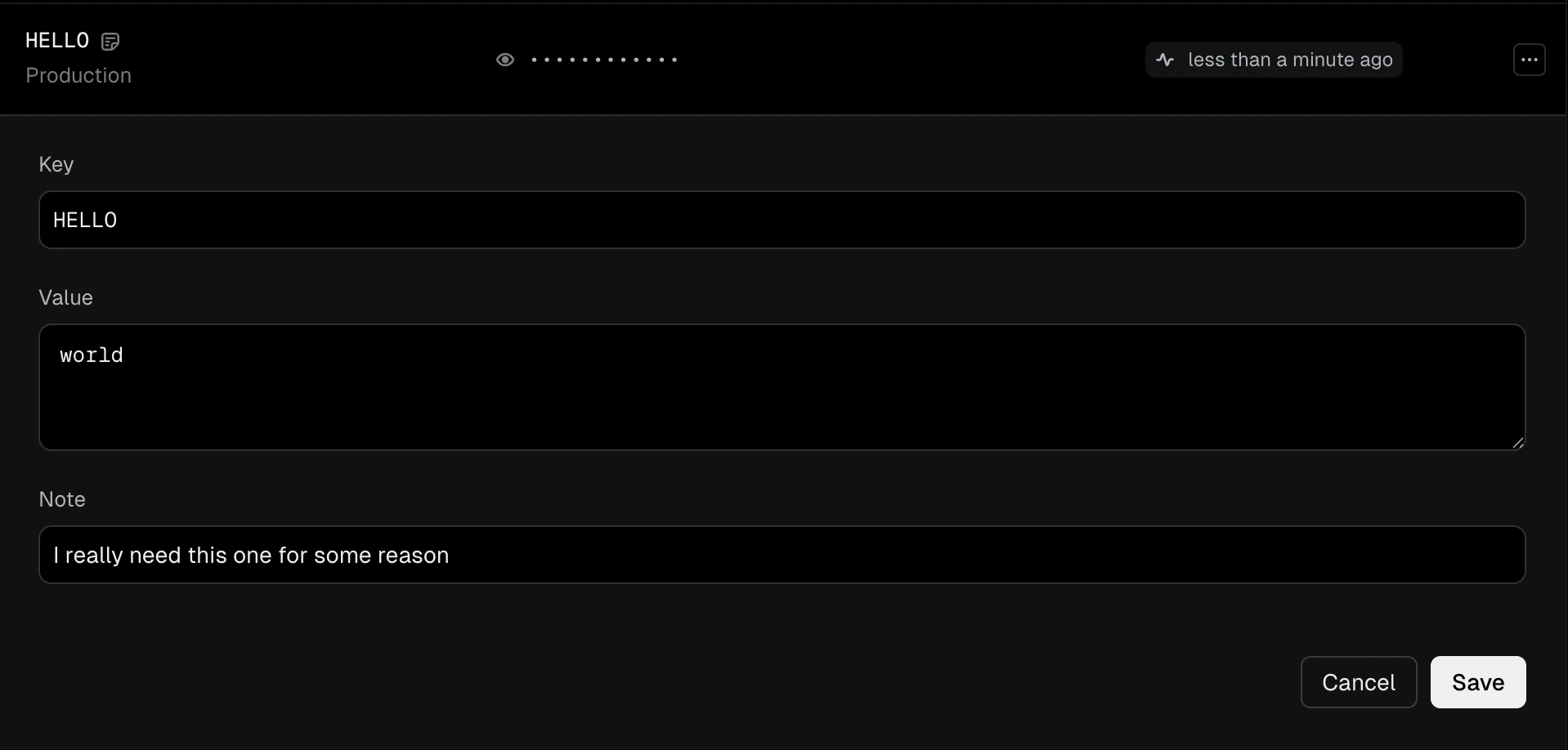
Unkey validates variable names for uniqueness within the same environment. If a variable with the same key already exists in the target environment, the form shows an error.
Sensitive variables
All variables are encrypted before they are stored — the Sensitive toggle does not change how a variable is encrypted. It only controls whether the value can be read back in the dashboard after saving. When Sensitive is enabled, the value becomes write-only: you can update or delete it, but you cannot reveal it again. Use this for API keys, database passwords, and tokens. Leave it off for non-sensitive configuration like feature flags, service URLs, and port numbers where being able to check the current value is useful.Environment scoping
Variables are tied to a specific environment. This lets you use different configuration for production and preview without managing separate config files:| Variable | Production | Preview |
|---|---|---|
DATABASE_URL | postgres://prod-db.acme.com/api | postgres://dev-db.acme.com/api |
LOG_LEVEL | warn | debug |
FEATURE_V2_UI | false | true |
Precedence over image defaults
Variables configured in Unkey take precedence over any environment variables set in your Dockerfile withENV. For example, if your Dockerfile sets ENV PORT=8080 but you configure PORT=8081 in Unkey, your application receives 8081 at runtime. This applies to all variables, not just PORT — Unkey’s runtime values always override image defaults.
Variables and deployments
Deployments are immutable. Variable changes don’t affect running deployments. To apply updated variables, trigger a new deployment. A redeploy banner appears at the top of the page after you make changes as a reminder.Next steps
Environments
How environments isolate configuration and deployments
App settings
Full reference for build, runtime, and variable settings